Über das Projekt

Das SNF-Forschungsprojekt Modern Painting and the Lesbian Gaze: Queer Women Artists in Europe, 1900 – 1950 untersucht die Beiträge queerer Malerinnen an der Aushandlung bildlicher Bedeutungen, die in der ersten Hälfte des 20. Jahrhunderts in Europa ausgefochten wurden – einer Zeit, die sowohl in der Kunst als auch in Bezug auf Geschlechterpolitiken von tiefgreifenden Veränderungen geprägt war. Während die Literaturwissenschaften seit längerem die Geschichte lesbischer Autorinnen und Gemeinschaften erforschen, steckt die kunsthistorische Auseinandersetzung mit der Bedeutung künstlerischer Praktiken queerer Frauen noch an den Anfängen. Bisher hat die feministische Kunstgeschichte in Forschungen zu Werken, die zwischen 1900 und 1950 entstanden sind, nicht-heterosexuelle Sexualitäten und Begehren weitgehend übersehen, während die queere Kunstgeschichte dazu neigte, die Arbeiten schwuler Männer zu priorisieren. Vor diesem Hintergrund schlägt dieses Projekt das Konzept eines lesbian gaze als methodologische Provokation vor, um den männlichen und heterosexuellen Blick als dominanten Interpretationsrahmen für moderne Malerei zu hinterfragen.

Im Rahmen dieses Projekts wird der Begriff Frau nicht als statische, biologisch determinierte Kategorie angewandt, sondern in einer Weise, die einem Spektrum geschlechtlicher Erfahrungen Rechnung trägt, von denen manche in der ersten Hälfte des 20. Jahrhunderts nicht öffentlich artikuliert und erkennbar waren. Der Oberbegriff queere Frauen bezieht sich auf Personen, die sich in dieser historischen Zeitspanne nicht durch heteronormative gesellschaftliche Konventionen eingrenzen liessen, sondern nicht-normative Sexualitäten und Geschlechtsidentitäten lebten oder in Betracht zogen.

Das zentrale Ziel des Projekts ist die Entwicklung einer queer-feministischen Kunstgeschichte der modernen Malerei, die Sexualität, Gender und Klasse in den Mittelpunkt ihrer Analyse stellt. Dabei verfolgt das Projekt drei methodische Absichten: Erstens verbindet es feministische und queere Ansätze, um die künstlerischen Praktiken von Frauen innerhalb der queeren Kunstgeschichte neu zu verorten. Zweitens insistiert es auf intersektionale Perspektivierungen, die die Rolle von Klasse für queeres Leben und für die Bedingungen künstlerischer Produktion, thematische Anliegen und die Verbreitung sowie Rezeption von Kunstwerken in den Vordergrund rückt. Besondere Aufmerksamkeit gilt dabei Bildgattungen, die als «untergeordnet» gelten, sowie Kunstwerken, die gemeinhin als «mittelmässig» abgetan werden. Drittens setzt das Projekt auf eingehende kunsthistorische Analysen, um aufzuzeigen, wie queere Künstlerinnen malerische Konventionen verhandelten, unterliefen oder sich neu aneigneten, und trägt damit zu einer dringend notwendigen Revision der Geschichte der modernen Malerei bei.

Projektleitung: 
Prof. Dr. Charlotte Matter 

Projektmitarbeiter*innen:
Antonia Kölbl, MA
Len Mettler, MA
Eli Ståhl, MA

Möchten Sie Updates zum Projekt erhalten? Dann senden Sie uns eine E-Mail an lesbiangaze-kunsthist@unibas mit dem Betreff «Mailingliste» und nennen Sie uns darin Ihren Namen und Ihre Pronomen. Wir nehmen Sie dann gerne in unseren Verteiler auf.
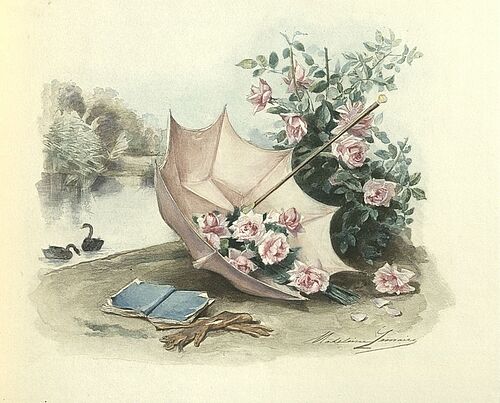
 

Madeleine Lemaire, Untitled illustration, Flirt by Paul Hervieu (Paris: Boussod Valadon et Cie, 1890); Sterling and Francine Clark Art Institute, photograph courtesy of Marisa Daley.

October 21, 2026 by Kirstin Ringelberg and in cooperation with eikones

Workshop with Kirstin Ringelberg: “Toute La Flore Vivante”: Floral Still Life’s Gender Potential

Botanists and historians are increasingly returning to the taxonomical moment of the nineteenth century to undo the binary systems cemented into place in that era. Can we apply their work to art?

The workshop will bring participants into shared discussion of how art history has supported false taxonomical binarisms—in gender, genre, style, and content—and how we might undo these to have a richer understanding of both art and life. Readings will include essays by Ringelberg (two of which unpublished) as well as texts by David J. Getsy and Emma Heaney. In the second part of the workshop, participants will have the opportunity to contribute specific questions related to their own research that resonate with the workshop’s readings and themes.

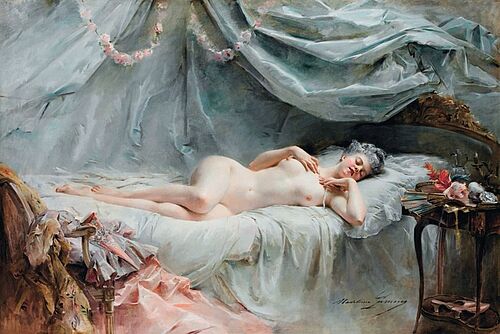
Madeleine Lemaire, Le Sommeil de Manon, ca. 1906, oil on canvas, 106 x 158 cm. Private collection; Wikimedia Commons.

Madeleine Lemaire, Le Sommeil de Manon, ca. 1906, oil on canvas, 106 x 158 cm. Private collection; Wikimedia Commons.

October 20, 2026 by Kirstin Ringelberg and in cooperation with eikones

Public Lecture on Madeleine Lemaire Through a Queer Lens

Kirstin Ringelberg introduces Belle Époque French painter Madeleine Lemaire (1845–1928), using a queer lens to reconsider the artist’s images of nude, partially clothed, and coupled women.

Throughout her career, Madeleine Lemaire (1845-1928) painted hundreds of works depicting women in various states of dress—and undress—and companionship with other women. These images tended to receive positive notice in both exhibitions and the popular press, with no recorded commentary on the purported appropriateness of a so-called “woman artist” representing seemingly Sapphic scenes. Yet today it remains common to hear that “women artists” on the whole did not paint such images, and when they did, such images were rarely if ever sexualized. In this presentation, Ringelberg will share a number of these images and ask the audience to rethink the mental frameworks that cause us to be unable to see them in their complexity.

Gerda Wegener
May 18, 2026 by Jonathan D. Katz and in cooperation with eikones

Workshop: Queer Art History – Methods and Terms

This one-day workshop, organized in conjunction with the exhibition The First Homosexuals: The Birth of New Identities 1869–1939 at the Kunstmuseum Basel, engages with the methods and terms of queer art history. Curator Jonathan D. Katz and associate curator Johnny Willis will share insights into the exhibition’s conceptual framework and the research process behind this scholarly exhibition and publication project. A central aim of the workshop is to explore what queer methodologies can contribute to art historical inquiry, while also critically addressing unresolved questions and reflecting on the project’s limitations and omissions. The morning session, held at the museum, will consist of a joint walkthrough of the exhibition and discussion of selected works. The afternoon session, hosted at eikones, will focus on lesbian and trans artists, as well as the question of colonialism. It will further develop questions of methodology and terminology through a discussion of readings circulated in advance.
Caption Gerda Wegener, Lili med fjerkost, 1920. Oil on canvas, 79.69 x 59 cm. Private collection, Denmark. © 2014 MORTEN PORS FOTOGRAFI. All Rights Reserved

Abbildung
May 17,2026 in cooperation with the kunstmuseum basel

Panel discussion on The First Homosexuals

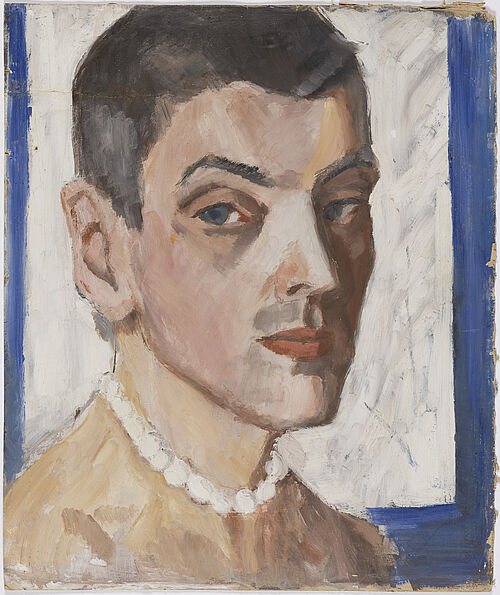
This panel discussion will reflect on the central ideas and broader implications of the exhibition The First Homosexuals. It will start with an introduction to the exhibition’s conceptual framework by Jonathan D. Katz, followed by a conversation that will explore what it means to center homosexuality—a term that emerged in the late nineteenth century from legal theory, psychiatry, and medicine—as an art-historical category. What is gained by understanding art as a record of queer life and experience? How can queer perspectives help us to understand certain works anew? The panel will situate the exhibition within current debates in queer art history and in relation to other recent exhibitions. Particular attention will be given to the Swiss context of this second iteration following Chicago, as well as the exhibition’s engagement with questions of colonialism. Caption: Karl Pärsimägi, Autoportree pärlitega, ca. 1935. Oil on cardboard, 51.8 x 43.5 cm. Art Museum of Estonia. Photo: Stanislav Stepaško

Nach oben